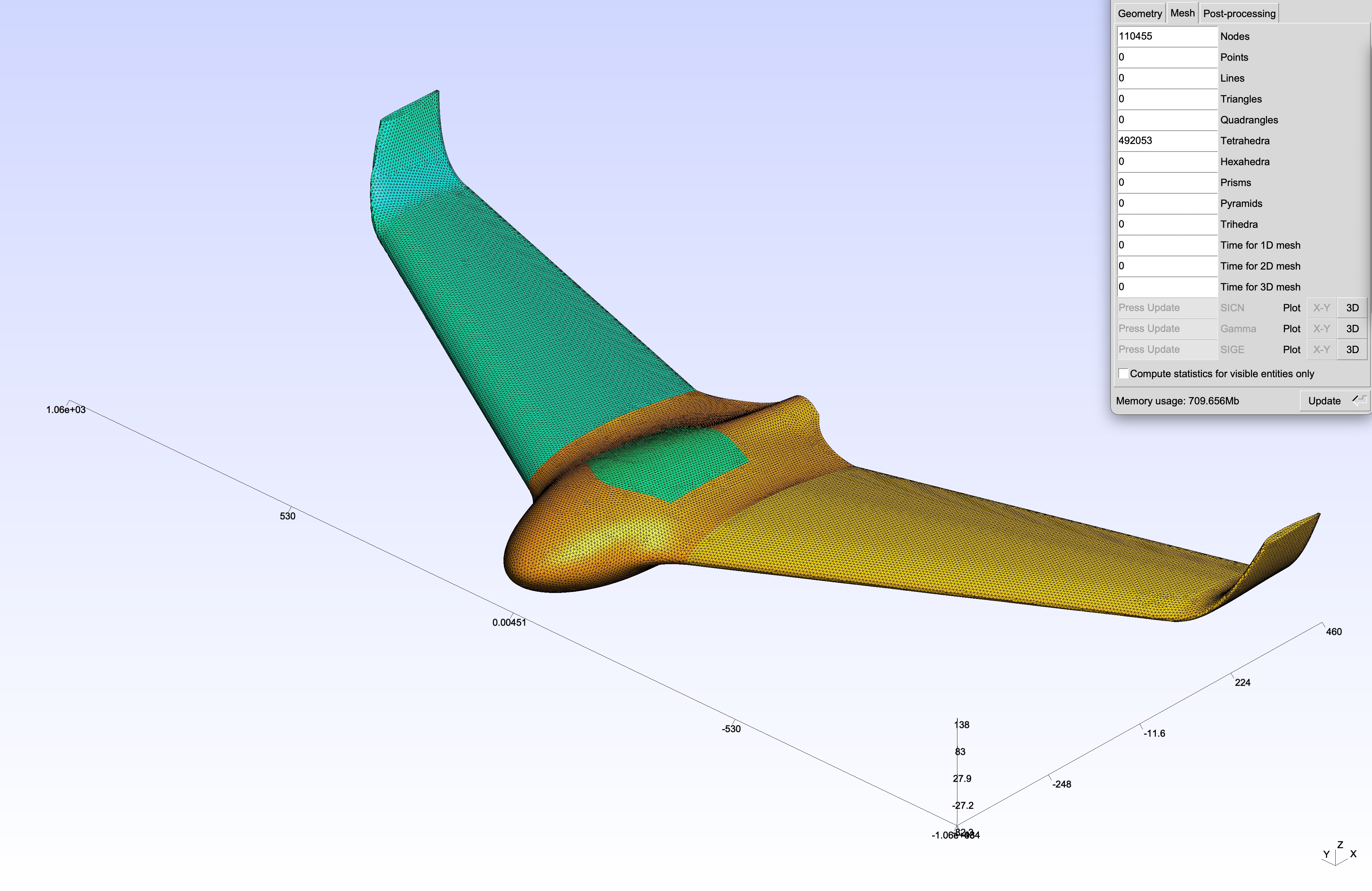
D3D Volume Integral Equation tackles ultra-large electromagnetic problems at a scale simply out of reach for any other solver.
D3D VIEQ solves full-wave, real-world geometries with millions of elements on engineering desktop workstations.
computational electrodynamics - dr. benedikt oswald introduces a revolutionary, AI-assisted, agentic browser interface for seamless cloud access to the D3D codes.
Engineers provide design specifications via:
The interface autonomously:
Your data confidentiality is paramount. We rely exclusively on secure and trustworthy AI models.
ELECTROMAGNETIC MANIFESTO - from the molecules of life to the latest communications and measurement technologies our world is built and depends on electromagnetic fields.
For the prosperous future intuitive understanding of all phenomena electrodynamic is vital. Engineers and scientists need new, intuitive tools.
The D3D solver collection provides these tools.
COMPUTATIONAL ELECTRODYNAMICS / FINITE ELEMENT METHOD / DISCONTINUOUS GALERKIN / INTEGRAL EQUATION METHODS / FREQUENCY DOMAIN / TIME DOMAIN / EIGENMODE ANALYSIS / APPROXIMATE CONVOLUTION METHOD / AI ASSISTED, INTUITIVE MESH GENERATION / BASED ON SOLID MODELING KERNEL / DISTRIBUTED MEMORY SPARSE LINEAR SOLVER / ITERATIVE KRYLOV SUBSPACE LINEAR SOLVER / GEOMETRY OPTIMIZATION / BASED ON SOLID MODELING KERNEL / ITERATIVE SOLVER
D3D Volume Integral Equation code solves the electric field volume integral equation (VIEQ) in the frequency domain.
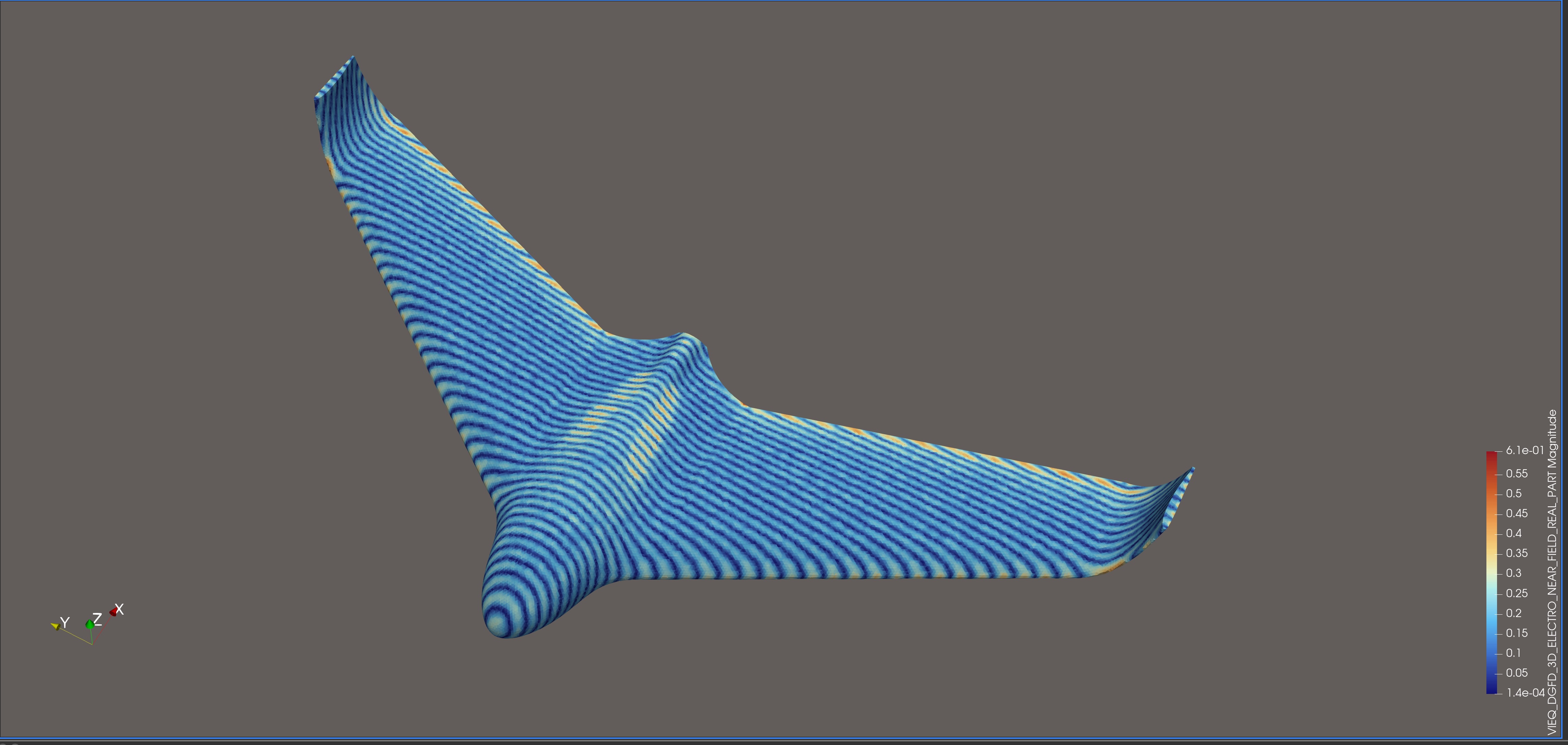
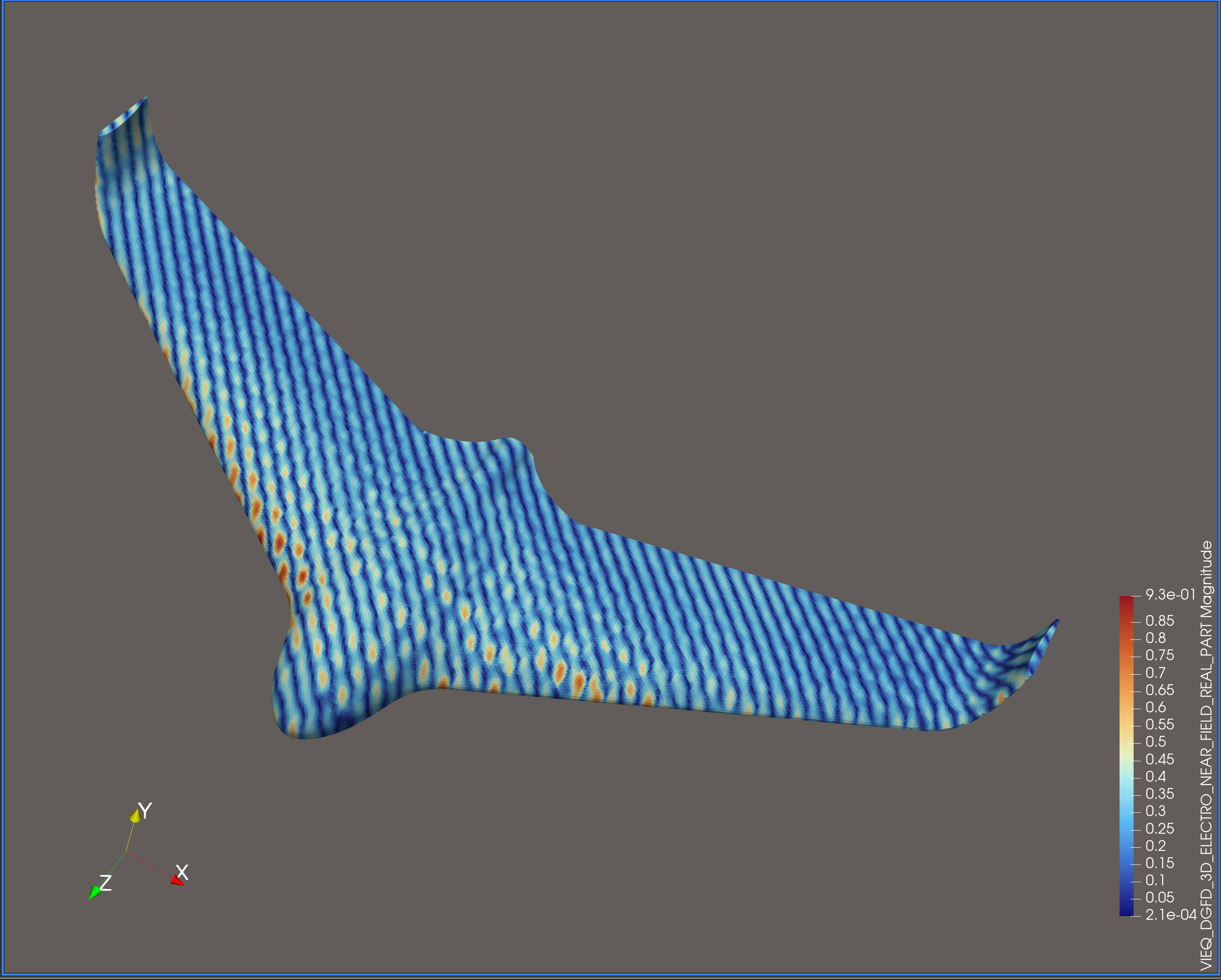
D3D Discontinuous Galerkin Frequency Domain solves the electric field vector wave equation in the frequency domain with a discontinuous Galerkin method. The D3D DGFD code is currently tested and will be accessible for customers in late 2026, maybe earlier for selected customers. D3D DGFD solves the toughest electrodynamic problems, is parallelized for shared memory server boards and distributed memory cluster computers. D3D DGFD scales from the modest laptop to the ultra-powerful supercomputer.
D3D Continuous Galerkin Time Domain solves the electric field vector wave equation in the time domain with a continuous Galerkin method. The D3D CGTD code is currently tested and will be accessible for customers in late 2026, maybe earlier for selected customers. D3D CGTD solves the largest electrodynamic problems, models dispersive dielectric materials, is parallelized for shared memory server boards and distributed memory cluster super computers. D3D CGTD scales from the modest laptop to the ultra-powerful supercomputer.
Computational precision across physical application domains. In accordance with our principles, detailed benchmark reports—including quantitative accuracy figures, convergence history, and solver telemetry—are distributed directly to known partners upon request.
High-frequency full-wave volume and surface solutions. Accurately predicts high-contrast dielectric resonators, dielectric resonator antennas (DRA), heterogeneous biological tissues, and canonical spherical scatterers.
Canonical dielectric spheres, dielectric resonator antennas (DRA), and inhomogeneous biological tissue phantoms.
Cross-validated against exact analytical Mie series across observation directions. In addition to near-fields, we offer full Radar Cross Section (RCS) far-field radiation and scattering plots, confirming strict energy conservation and reciprocity.
High-order polynomial volumetric basis functions on tetrahedra. The dense direct solver is used as an exact reference whenever problem dimensions permit, while iterative solver schemes accelerated by approximate convolution are deployed on a routine basis to solve ultra-large electromagnetic problems.
Complete execution logs, condition numbers, convergence metrics, Radar Cross Section (RCS) far-field plots, near-field slices, and analytical comparison datasets are compiled in the official benchmark document.
Detailed benchmark documents, verification data, and raw solver telemetry are provided directly to qualified engineering and research partners.
Electromagnetic signature predictions validated against experimental anechoic chamber measurements from the University of Texas at Austin suite and aerospace airframe platforms.
NASA Almond benchmark models across physical configurations: closed PEC, solid resin, closed tail-coated, and open tail-coated structures.
Monostatic and bistatic azimuth sweeps validated against experimental anechoic chamber measurements and independent computational reference solutions for both polarizations.
High-capacity volumetric iterative solvers accelerated by approximate convolution, capturing tip diffraction, surface creeping waves, and coated cavity resonances.
Polar and Cartesian radar cross-section plots, experimental measurement overlays, and iteration convergence data are compiled in the official benchmark document.
Detailed benchmark documents, verification data, and raw solver telemetry are provided directly to qualified industrial and defense partners.
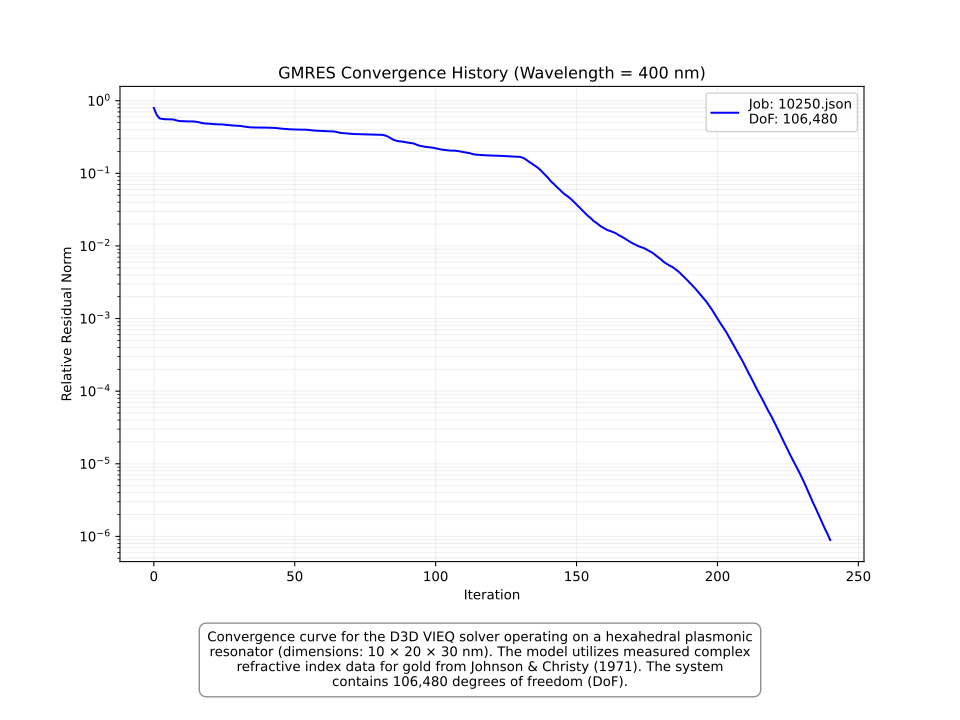
Sub-wavelength nanophotonics and localized surface plasmon resonance (LSPR). Verified against exact analytical Mie series with dispersive experimental metal permittivities.
Gold and silver nanosphere resonators, dimers, nanorod antennas, and high-index dielectric nano-resonators.
Cross-checked against exact analytical Mie theory across the resonance spectrum for extinction, scattering, and absorption cross-sections.
High-order polynomial volumetric basis functions resolving sub-wavelength skin-depth gradients and boundary-layer near-field singularities in metallic nanoparticles.
Extinction and scattering spectra, Poynting absorption balances, near-field electric field vector maps, and solver execution timings are compiled in the official benchmark document.
Detailed benchmark documents, verification data, and raw solver telemetry are provided directly to qualified nanophotonics and plasmonics research teams.
Computational electrodynamics for sub-nanometer extreme ultraviolet lithography regimes. Full-wave 3D electromagnetic modeling of near-field diffraction and material interactions.
Part of the work for the upcoming solver release. Extreme ultraviolet computational electrodynamics benchmarks and verification datasets are currently in active preparation.
Full-wave computational electrodynamics for extreme ultraviolet regimes, addressing 3D diffraction and near-field interactions at the sub-nanometer scale.
Rigorous volume integral formulation engineered to capture volumetric optical contrast, phase variation, and geometric details without artificial boundary truncation.
In alignment with our engineering standards, computational benchmarks undergo extensive multi-level verification and sanity checks before public release.
Benchmarking and telemetry datasets are actively being prepared for the upcoming solver release. Collaborative evaluation inquiries are welcome.
Discuss extreme ultraviolet computational electrodynamics capabilities and pre-release evaluation directly with our technical team.
A chronological record of our continuous development and operational progress. We overachieve.